
TV Disposal

Plasma TV disposal

Plasma TV disposal in the UK: large, heavy plasma screens collected safely from your home and sent to a WEEE treatment facility for recycling.

In short: Plasma TV disposal is the collection and recycling of old plasma screen televisions, which are heavier than modern LED TVs and often wall mounted. It suits anyone replacing an old plasma set or clearing one from a spare room. Collecting a plasma TV usually costs £30 to £65 depending on size, weight and access.

Get a free quote

Fixed price, no obligation. We aim to reply the same day.

By sending this form you agree to be contacted about your enquiry. See our privacy policy.

Plasma TV disposal

Plasma TVs were popular in the UK from the early 2000s until the main manufacturers stopped making them around 2014. Many are still in use or stored, and they are much heavier than the LED and OLED TVs that replaced them. A 42 inch plasma often weighs 25 to 30 kilograms and a 50 or 60 inch set can be considerably more, with thick glass front panels that make them awkward and tiring to carry.

A plasma panel contains glass, metals, circuit boards and the gases and phosphors used to create the picture, so it needs to go through a WEEE treatment route rather than general waste. Because many were wall mounted on heavy duty brackets, a disposal visit often includes taking the set down from the wall. A collector can then carry it out upright and take it to a permitted facility.

What is included

  • Collection of plasma TVs of any size from any room
  • Two-person lift for large and heavy sets
  • Taking the TV down from a wall bracket, with bracket removal on request
  • Old pedestal stands, speakers and AV boxes taken with the TV
  • Protecting the screen and your walls and doorways during removal
  • Transport to a permitted WEEE treatment facility

Who it is for

  • Homes upgrading from an old plasma to a new TV
  • Plasma sets that have developed faults or screen burn-in
  • Wall-mounted plasmas that are too heavy for one person to take down
  • Landlords and hotels clearing old plasma screens
  • Anyone without a vehicle large enough to transport a big plasma

How much does it cost?

As a guide, collecting a plasma TV usually costs £30 to £65, with taking it down from a wall bracket often adding £20 to £50. Very large sets and difficult access can cost more. See our full cost guide.
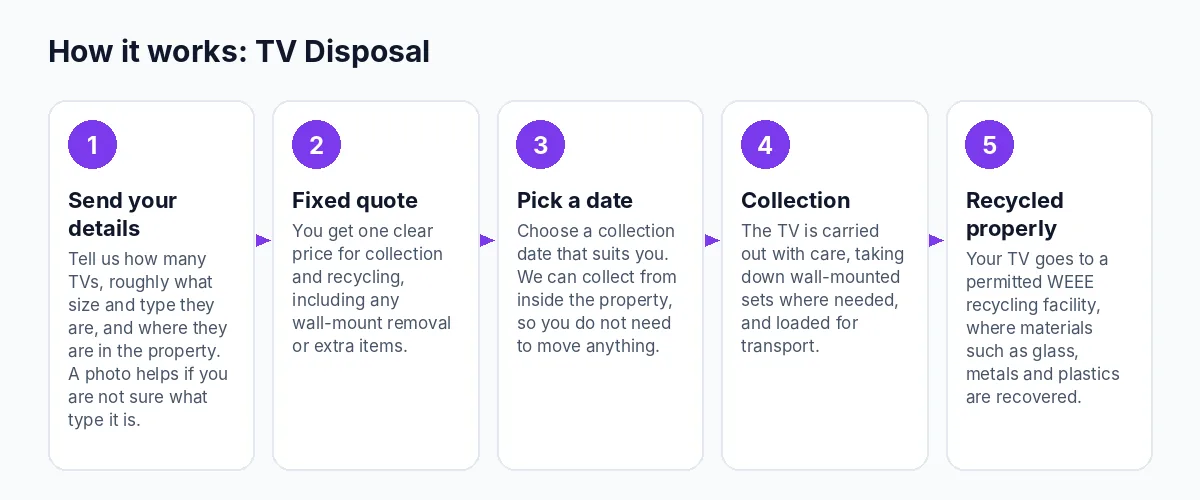
How it works

How plasma tv disposal works, step by step
  1. Check the set

    Send the screen size, the model if you know it and whether it is on a stand or bracket.

  2. Fixed quote

    One price is agreed, covering the collection, any wall removal and recycling.

  3. Remove and carry

    The TV is taken off its stand or bracket by two people, kept upright and carried out carefully.

  4. Recycle

    The set goes to a permitted WEEE facility for dismantling and recovery of its materials.

Plasma TV disposal: FAQs

Why are plasma TVs so heavy?

Plasma screens use two thick sheets of glass with a gas-filled layer of tiny cells between them, plus a heavy metal chassis and power supply. That makes them far heavier than LED or OLED TVs of the same size. A large plasma usually needs two people to lift safely, particularly when taking it off a wall bracket or carrying it down stairs.

Is it worth selling an old plasma TV?

Usually not. Plasma TVs have been out of production for years and most have little resale value, especially larger sets that are costly to transport and use more electricity than modern TVs. A working set might find a home through local free-to-collector listings. Faulty sets or those with screen burn-in are best recycled.

Can a plasma TV be laid down for transport?

It is best kept upright. Plasma panels are heavy glass, and laying them flat can put stress on the panel and its mountings, which may crack the glass. For recycling this matters less than for resale, but upright transport is still safer to handle and reduces the chance of broken glass in the van.

Does a plasma TV contain mercury?

Plasma screens do not use the mercury-containing fluorescent backlights found in many older LCD TVs. They do contain glass, metals, circuit boards and phosphor coatings that need proper treatment and recovery, which is why they must be recycled through a WEEE route. Like all TVs, they should never go in household bins or be fly-tipped.

Get a quote for plasma tv disposal

Send a few details and get one clear, fixed price, usually the same day.

Get a quote

Last updated 6 November 2026