Flat screen TVs are lighter than old tube sets, but they are awkward. A 55 or 65 inch screen is wider than most hatchback boots, the panel is thin and flexes if it is carried flat, and the glass can crack if it is knocked on a door frame or stair rail. Many people who could manage the tip with a small TV find a large modern screen simply will not fit in the car, or need a second person to move it safely.
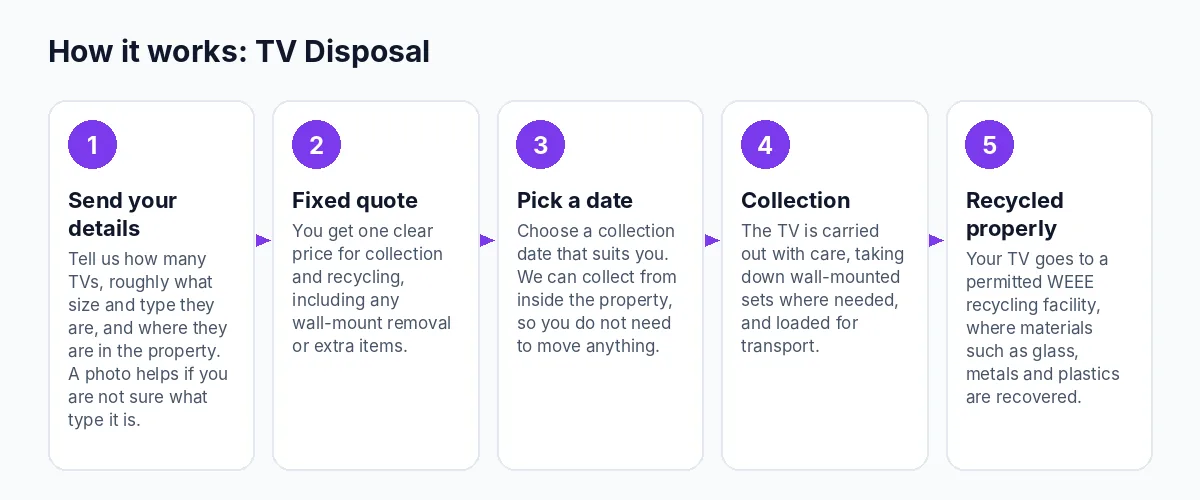
A collection takes that problem away. The TV is lifted from wherever it is, whether that is a lounge, bedroom, loft or garage, carried out upright and loaded for transport. It then goes to a permitted WEEE treatment facility rather than general waste. Older LCD screens, roughly those made before about 2010, often have fluorescent backlights containing small amounts of mercury, and all flat screens contain circuit boards, metals and plastics that can be recovered.
What is included
- Collection from any room, including upstairs rooms, lofts, garages and sheds
- Carrying the TV upright and on its edge to avoid flexing or cracking the panel
- Stands, remotes and cables taken with the TV if you want them gone
- Screens of any size, from small kitchen TVs to 75 inch and larger
- Smart TVs, curved TVs and TVs with damaged or cracked screens
- Transport to a permitted WEEE recycling facility
- Other small electricals such as soundbars and set-top boxes added on request
Who it is for
- Anyone with a large screen that will not fit in their car
- People who cannot safely lift or carry a TV down stairs
- Households that have just had a new TV delivered without take-back
- TVs with cracked screens or faults that are not worth repairing
- Spare-room or garage TVs that have been sitting unused for years
How much does it cost?
As a guide, collecting and recycling a single flat screen TV usually costs £25 to £60, with each additional TV in the same collection often £10 to £25. Very large screens and difficult access can sit at the top of the range. See our full cost guide.